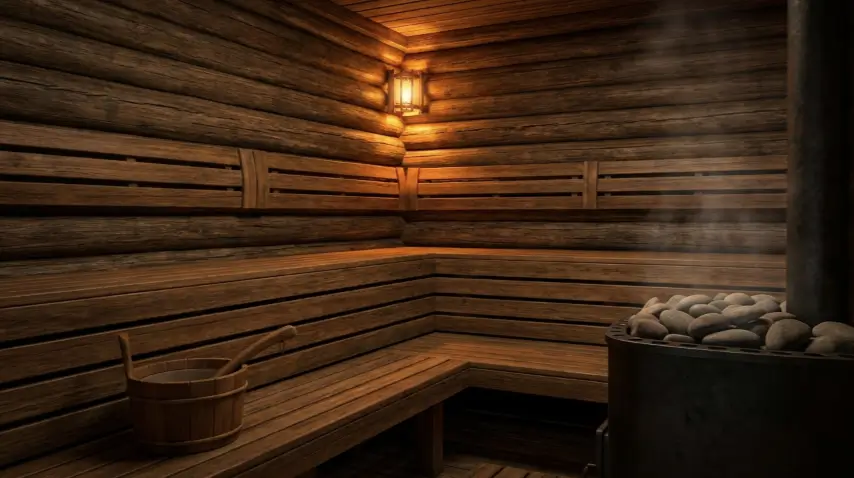
For two adults bathing daily, the sweet spot is a 4 by 6 to 5 by 7 foot cedar or hemlock room with a 4.5 to 6 kW electric heater, two-tier benching, and its own 240V circuit. That combination heats in 30 to 45 minutes, holds temperature evenly through back-to-back sessions, and avoids the wear that undersized rooms and heaters take on when used seven days a week instead of occasionally.
How Much Room Do Two Daily Users Really Need?
A single-use sauna built for occasional guests can get away with a tight 4 by 4 foot footprint. Daily use changes the math. Two people sitting or lying down for 15 to 20 minutes want enough bench length to stretch out without their feet in the heater guard, and enough aisle space to sit up and towel off without brushing hot rock. A 4 by 6 foot interior gives one lower and one upper bench with about 6 feet of usable length, which is enough for one person to lie flat while the other sits upright. Step up to 5 by 7 feet and you get an L-shaped bench layout that lets both people recline at once, which matters more once the sauna becomes a daily habit rather than a weekend treat.
Ceiling height matters just as much as floor space. Most kit-built rooms run 6.5 to 7 feet tall, tall enough for the upper bench to sit above the worst of the floor-level cool air without putting a standing adult’s head near the hottest air at the ceiling. Going taller than 7 feet mostly wastes heater capacity, since hot air pools higher than anyone is sitting.
What Heater Size Keeps Up With Daily Cycling?
Electric sauna heaters are rated by cubic footage, not square footage, because a taller or more exposed room needs more watts to hold the same air temperature. For a 4 by 6 by 7 foot room, that works out to roughly 168 cubic feet, which most manufacturer charts place in the 4.5 kW range. A 5 by 7 by 7 foot room runs closer to 245 cubic feet and usually calls for 6 kW. Rooms built against an exterior wall, with a glass door, or in an unheated garage typically need to size up one bracket from the chart, since cold surfaces pull heat out of the air faster.
Daily use also means the heater cycles far more often than an occasional-use unit, so a slightly larger heater that reaches temperature in under 40 minutes and then coasts on its thermostat tends to outlast an undersized one running at full output for every session.
Which Wood Actually Holds Up to Everyday Heat?
Western red cedar is the traditional choice for a reason: its natural oils resist moisture, mold, and insects without any finish, which matters when a room is heating and cooling daily instead of once a week. It is also more expensive and carries a noticeably stronger aroma that some daily users eventually find overwhelming in a small room. Nordic spruce and hemlock cost less, run lighter in color, and have a much milder scent, which some people prefer for daily sessions where they are not looking for a strong cedar smell every single time. Basswood is another common bench material because it stays cooler to the touch than cedar even at high temperatures, which is worth considering for the seating surface even if the walls are cedar.
How Should the Room Handle Daily Moisture and Ventilation?
A sauna used every day needs an intake vent low near the heater and an exhaust vent high on the opposite wall, sized per the heater manufacturer’s instructions, so humidity and stale air actually cycle out between sessions instead of building up in the wood. Skipping proper ventilation is the fastest way to shorten the life of daily-use paneling, since trapped moisture behind warm wood is what eventually causes graying and soft spots. A vapor barrier behind the wall paneling, foil facing the heat source, is standard on quality kits and becomes more important the more often the room is used.
What Does a Daily-Use Setup Cost to Build and Run?
Pricing for a 4 by 6 to 5 by 7 foot cedar kit with a matched heater generally lands between $3,500 and $7,000 depending on wood grade and control features, before electrical work. A licensed electrician running a dedicated 240V line typically adds $300 to $900 depending on distance from the panel. On the running-cost side, a 6 kW heater used for 45 minutes a day, seven days a week, usually adds somewhere in the $15 to $30 range to a monthly electric bill at average residential rates, though this varies a lot by region and utility. For people comparing complete kits rather than building custom, the team at SweatDecks lists several two-person traditional models with the heater, bench material, and ventilation already matched to the room size, which removes a lot of the sizing guesswork described above.
See also: DHEA, the Hormone Everyone’s Selling and Almost Nobody Actually Needs
What Bench Layout Works Best for Two People Every Day?
Two-tier benching, lower bench around 17 to 19 inches off the floor and upper bench around 40 to 43 inches, lets each person choose their heat level independently since air temperature can vary 20 degrees or more between the floor and ceiling of a small room. For daily users, having both a hot spot and a cooler spot available in the same session matters more than it does for occasional visitors who are willing to just tolerate whatever the room offers. An L-shaped or U-shaped bench arrangement also keeps both people’s feet out of the heater’s direct radiant zone, which is a common complaint in narrower rectangular rooms.
Frequently Asked Questions
How big should a two-person traditional sauna be?
Most couples do well with 4 by 6 feet to 5 by 7 feet of interior floor space, which gives two adults room to lie down on the upper bench or sit side by side without crowding the heater guard.
What size heater does a daily-use sauna need?
A room in that range typically calls for a 4.5 to 6 kW electric heater, sized to the cubic footage rather than the floor area alone, since ceiling height and wall material both change the heat load.
How long does a traditional sauna take to heat up?
Expect 30 to 45 minutes for a properly sized electric heater to bring a small room up to 170 to 190 degrees Fahrenheit, faster if the room is preheated regularly and the door seals well.
Is cedar or hemlock better for a sauna used every day?
Both hold up well under daily heat cycling. Western red cedar resists moisture and insects naturally and smells stronger, while hemlock is lighter in color, less aromatic, and often less expensive for the same grade.
Does a home sauna need its own electrical circuit?
Most heaters above 4.5 kW need a dedicated 240V circuit sized by a licensed electrician, separate from other household loads, and the breaker size should match the heater manufacturer’s spec sheet exactly.
References
- “Association between sauna bathing and fatal cardiovascular and all-cause mortality events,” JAMA Internal Medicine (2015). PubMed.
- “Joint associations of sauna bathing and cardiorespiratory fitness on cardiovascular and all-cause mortality risk: a long-term prospective cohort study,” Annals of Medicine (2018). PubMed.
- “The Interplay between Systolic Blood Pressure, Sauna Bathing, and Cardiovascular Mortality in Middle-Aged and Older Finnish Men: A Cohort Study,” The Journal of Nutrition, Health & Aging (2023). PubMed.
By Emily Sanders
