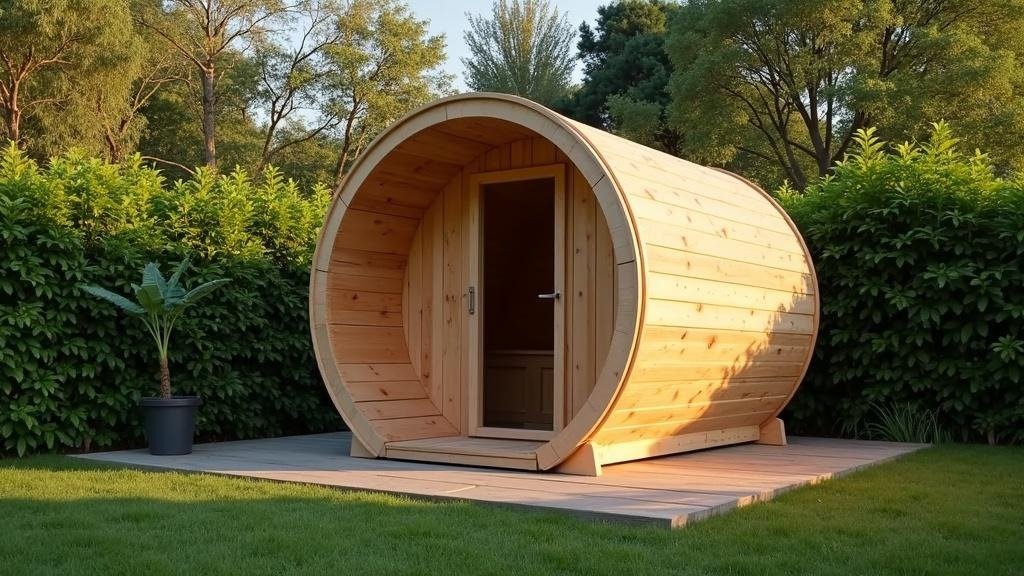
You’ve been eyeing the backyard corner where the old deck furniture used to sit. Maybe your partner keeps sending links. Maybe your knees have been lousy since last winter and the physical therapist mentioned heat therapy. Whatever got you here, you’re now trying to figure out which home sauna is actually worth several thousand dollars and not just a glorified garden shed that smells like cedar for two weeks.
This list covers eleven options across every format, price point, and use-case. It is not a spec sheet. It is an honest guide written for people spending real money.
What Separates a Good Home Sauna From a Waste of Space
A few things were weighed for every pick below.
Build material and heat type. Cedar and hemlock hold up in humid, hot conditions. Infrared runs cooler (typically 120 to 150 degrees Fahrenheit) than traditional Finnish-style heat (180 to 200 degrees F). Neither is objectively superior. They suit different preferences.
EMF output. Some infrared panels emit low non-native EMF; others emit essentially none. Brands address this differently and their specs are worth reading before you buy.
Realistic footprint. A two-person barrel fits most yards. A four-person indoor cabin needs a dedicated room with adequate ventilation and an appropriate electrical circuit.
After-sale support. A sauna is not a toaster. It needs installation, occasional maintenance, and sometimes replacement parts. Who answers the phone in year two matters enormously.
See also: grow your business influence
The 11 Picks
1. Sun Home Saunas Luminar Series
Sun Home’s Luminar line uses full-spectrum infrared panels that combine near, mid, and far wavelengths in one unit. The construction is Canadian hemlock throughout. Pricing lands in the premium tier, and the brand has collected editorial mentions from Forbes and Fortune for a reason. Sun Home also sells the Cold Plunge Pro, a chiller-equipped cold plunge that reaches approximately 32 degrees Fahrenheit, priced between roughly $9,000 and $14,500 depending on configuration. If you want a matched infrared-plus-cold-plunge setup from one brand, Sun Home is the obvious candidate.
2. Sunlighten
Sunlighten has been building infrared saunas since 1999, long before the category became fashionable. Their mPulse series allows users to dial in specific infrared wavelength programs. The company is direct-to-consumer but has a support infrastructure that reflects years in the market. They sit firmly in the premium segment, and their low-EMF claims are backed by third-party testing documentation they publish openly.
3. Clearlight Saunas
Clearlight makes a genuinely strong argument in the infrared category by leaning hard on their True Wave heater technology, which they say produces near-zero EMF. Their Sanctuary series accommodates two to five people in solid basswood or cedar. Clearlight is not cheap, typically starting around $4,000 and going well past $7,000 for larger cabins, but their longevity in the market and the consistency of owner reviews across independent forums suggest a product that holds up.
4. Almost Heaven Barrel Saunas
Almost Heaven makes traditional barrel saunas in solid spruce and cedar, and their most popular models sit around $4,999. Barrel saunas heat faster than rectangular cabins because the round interior has less dead air space. Almost Heaven’s outdoor barrels are a genuine value in the traditional sauna category. Assembly is DIY, which keeps costs down but means you should be comfortable with a few hours of mechanical work.
5. Plunge Sauna Mini
Plunge, better known for its cold plunge products, entered the sauna market with the Plunge Sauna Mini at approximately $10,000. It is a compact cedar unit designed to pair with their All-In cold plunge chiller ($4,990 to $5,990). The sauna itself uses a traditional electric heater, not infrared. The appeal here is really about the combination: hot and cold contrast therapy in a matched-aesthetic setup from one brand with one customer service line.
6. HigherDOSE Infrared Sauna Blanket and DOME
HigherDOSE is the lifestyle entry in this list. Their sauna blankets are not saunas in the traditional sense, but they deliver infrared heat and cost well under $700, making them the genuine entry point for anyone testing the waters before committing to a cabinet. Their DOME product is a step up. If design matters to you and you live in a small apartment, HigherDOSE has figured out how to make heat therapy fit that context.
7. Dynamic Saunas
Dynamic is the budget infrared option most often recommended on home improvement forums. Their two-person units frequently appear at retailers around $1,200 to $2,000. The hemlock construction is serviceable rather than exceptional. If you want to spend under $2,000 on an infrared sauna and understand you are buying an entry-level product, Dynamic delivers reasonable value for that expectation.
8. Ice Barrel
Ice Barrel is not a sauna. But it belongs here as the accessible cold-therapy companion for anyone on a tight budget. At $1,150 to $1,500, it is an upright ice-based barrel that requires no electricity and no chiller. You fill it with ice. That simplicity is the point. It will not stay cold automatically the way a chiller unit does, which matters for daily habit-building, but the price difference compared to chiller systems is enormous.
*A quick honest note: wellness claims around sauna and cold plunge use vary widely in the scientific literature. General relaxation and recovery use is well-documented. Stronger health claims deserve more skepticism.*
9. Sweat Decks
Sweat Decks is not a single sauna product but a full-service retailer carrying barrel, cube, indoor, outdoor, and infrared models alongside cold plunges, heaters, and accessories. What distinguishes them from most online sellers is the service side: white-glove delivery and installation is standard, they have local crews in Austin, Los Angeles, and Houston, and they use vetted contractors for the rest of the country. They will also come back out for on-site repairs rather than routing every problem through email. For buyers who want someone else to handle the electrical, the leveling, and the follow-up, that’s a genuinely different offer than drop-shipping a flat-pack box.
10. Finnleo (by TyloHelo)
Finnleo is the professional-grade option most sauna purists point to. TyloHelo is a Finnish-Swedish group with decades in commercial sauna manufacturing, and their residential line reflects that heritage. If you want something built to the standard of an actual Finnish bathhouse, Finnleo is worth pricing out, though availability through authorized dealers varies by region.
11. Harvia
Harvia is a Finnish public company trading on the Helsinki Stock Exchange, which tells you something about their scale. They make both traditional and infrared saunas plus electric and wood-burning heaters sold under their own name and through other brands. Their heaters appear inside many North American sauna kits regardless of what name is on the box. Buying a Harvia-branded unit directly is a reasonable move if you want known components and European manufacturing standards.
How to Actually Choose
Start with your space, not the brand. An outdoor barrel fits a 10 by 10 foot corner and a standard 240-volt outlet. A large indoor cabin needs more ceiling height, dedicated ventilation, and potentially a 60-amp circuit. Get your measurements and your electrician’s opinion before you spend a dollar.
Then decide: infrared or traditional. Infrared is easier to install, cheaper to run per session, and heats up in 15 minutes. Traditional runs hotter, takes longer to heat, and is what most people mean when they say sauna. Neither is wrong.
Finally, factor in support. If you are comfortable assembling and troubleshooting yourself, a direct-ship brand works fine. If you want someone to show up and handle the whole thing, a full-service retailer is worth the difference in price.
The best home sauna is the one you actually use twice a week. Everything else is detail.
Common Questions
Does the Sunlighten mPulse actually heat differently than a standard infrared sauna?
Yes, in a practical sense. Standard infrared saunas emit primarily far-infrared at a fixed output. The mPulse lets you switch between near, mid, and far programs, or blend them, depending on what you want from a session. Whether those distinctions produce meaningfully different outcomes is still debated in the literature, but the hardware difference is real.
Is a barrel sauna from Almost Heaven genuinely faster to heat than a rectangular cabin at a similar price?
It is. The curved interior eliminates the upper corners where hot air pools uselessly in a rectangular box, so the round volume heats more evenly and reaches temperature faster. Almost Heaven’s spruce and cedar models around $4,999 typically hit usable heat in 30 to 45 minutes with a properly sized electric heater, which is faster than most comparably priced rectangular cabins.
If I already own a Plunge All-In cold plunge, does buying the Plunge Sauna Mini make financial sense over a cheaper sauna?
Mainly for convenience and aesthetics. The Plunge Sauna Mini at roughly $10,000 uses a standard electric heater you could find in competing units at lower prices. What you are paying for is the matched design, cedar finish, and single-brand warranty support. If those things matter to your setup, the premium is defensible. If they don’t, a less expensive traditional sauna does the same job.
How does Clearlight’s True Wave heater claim compare to what Sunlighten publishes about their own EMF levels?
Both brands publish third-party EMF test results and both claim very low readings. Clearlight specifically markets near-zero EMF as a core selling point of True Wave. Sunlighten’s documentation is similarly detailed and openly available on their site. Neither company’s claims have been publicly contradicted by independent testing, but reading the actual test documents rather than the marketing summaries is worth your time before spending $4,000 or more.
Can a HigherDOSE sauna blanket replace a cabinet sauna for someone with limited space, or is the gap too large?
For consistent daily use in a small apartment, the blanket is a reasonable substitute, not a full replacement. It delivers infrared heat and costs under $700, but you are lying down rather than sitting upright, and the experience is closer to a heated sleeping bag than a sauna session. The DOME product closes some of that gap. If a cabinet sauna is genuinely impossible given your space, HigherDOSE is the most practical path in this category.
Sources
- Sun Home Saunas official product pages (public pricing and spec sheets)
- Sunlighten third-party EMF testing documentation (published on their site)
- Plunge.com product listings (Plunge Sauna Mini and All-In plunge pricing)
- Almost Heaven Saunas retailer listings and manufacturer site
- HigherDOSE product catalog
- Harvia Group investor and product pages (Helsinki Stock Exchange listed)
- TyloHelo/Finnleo North America dealer network pages
- Independent sauna community forums including r/sauna (Reddit) for real-owner feedback on Dynamic and Clearlight products